Mistral AI's Remote Coding Agents and Medium 3.5: A Q&A Guide
Mistral AI has been quietly advancing its open-source coding ecosystem. With the launch of remote agents in their Vibe platform and the public preview of Mistral Medium 3.5, developers now have powerful new tools for automating software tasks. This Q&A explains the key features and how they work together.
What is Vibe, and Why Should Developers Care?
Vibe is Mistral's coding agent, accessible via a command-line interface (CLI). It acts like a tireless junior developer that can write code, refactor modules, generate tests, investigate CI failures, and more. Until now, Vibe sessions ran locally on your machine. The new update introduces remote agents, which allow sessions to run in the cloud. This means you can kick off tasks and walk away—no more babysitting every step. Vibe integrates with GitHub (for code and PRs), Linear and Jira (for issues), Sentry (for incidents), and Slack or Teams (for notifications). It's a practical ecosystem for automating repetitive development work.
How Do Remote Agents Change the Workflow?
Previously, Vibe sessions were tied to your local terminal. With remote agents, you can start a session from the CLI or even from Le Chat, Mistral's consumer assistant. The agent runs entirely in the cloud, handling long tasks while you're away. You can run many sessions in parallel without being a bottleneck. While the agent works, you can inspect its progress via file diffs, tool calls, and progress states. When it finishes, Vibe can automatically open a pull request on GitHub and notify you. This shift from synchronous to asynchronous coding saves hours of active monitoring.
What Is the 'Teleport' Feature?
One standout feature is the ability to teleport an ongoing local CLI session to the cloud. If you're in the middle of a session on your laptop but need to leave, you can move the entire session—including history, task state, and any approvals—to a remote agent. The work continues from exactly where you left off, just off your machine. This eliminates the need to restart or lose context. It's designed for developers who start work locally but want to let long-running tasks complete without tying up their computer.
How Does Vibe Connect to Le Chat?
Mistral uses Workflows orchestrated in Mistral Studio to bring Vibe's capabilities into Le Chat. What started as an in-house tool is now available to everyone. The remote coding agent in Le Chat isn't a standalone feature—it's built on top of Mistral's own orchestration layer. This means you can interact with the agent through a chat interface, asking it to complete tasks while you monitor progress. For developers building similar systems, this architecture offers a useful reference: a shared orchestration layer that connects a CLI tool, a chat interface, and backend agents.
What Third-Party Integrations Does Vibe Support?
Vibe plugs into several popular developer tools:
- GitHub for code access and creating pull requests
- Linear and Jira for reading and updating issues
- Sentry for investigating incidents
- Slack and Teams for reporting and notifications
These integrations allow the agent to operate across your entire workflow—from tracking bugs to deploying fixes—without manual intervention. Each session runs in an isolated sandbox, so actions like installing packages or editing files won't affect other sessions.
What Is Mistral Medium 3.5 and Why Is It Important?
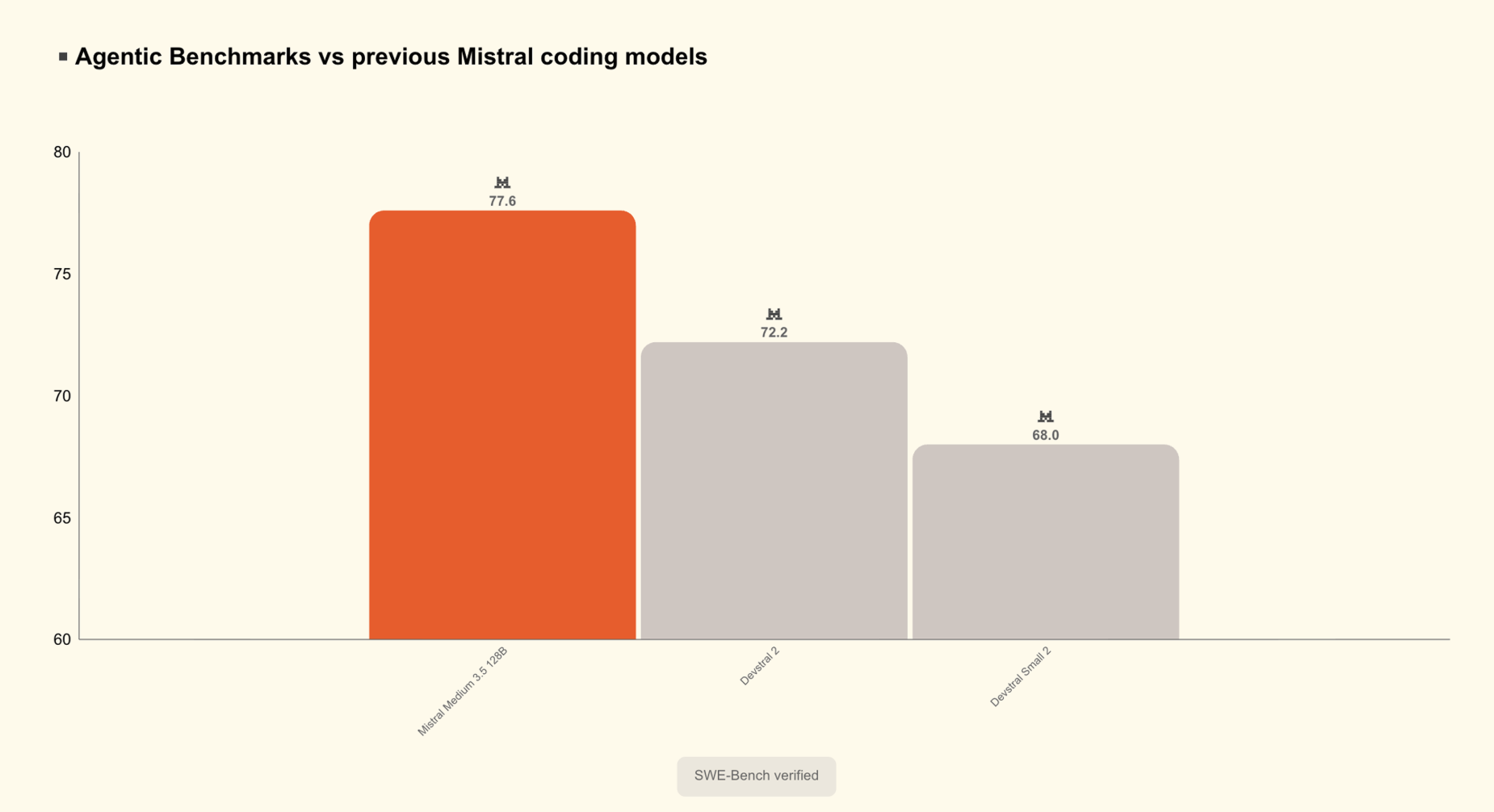
Mistral Medium 3.5 is a new 128B dense model now in public preview. It serves as the default model for both Vibe and Le Chat. What makes it notable is its 77.6% SWE-Bench Verified score, indicating strong performance on software engineering tasks. The model's density (all parameters active) means it doesn't rely on mixture-of-experts routing, which can simplify deployment. For Vibe users, this model handles complex coding tasks—like refactoring or test generation—with high reliability. It's the engine that makes remote agents practically useful, providing fast, accurate code generation and reasoning under the hood.