Ransomware Landscape Q1 2026: Consolidation, Key Players, and Trends
The first quarter of 2026 marked a pivotal shift in the ransomware ecosystem. After months of fragmentation, the threat landscape is now consolidating around a handful of dominant groups. While overall victim numbers remain historically high, the story is less about volume and more about market structure. Below, we answer the most pressing questions about Q1 2026 ransomware developments, drawing on key data from data leak sites and group activity.
How many ransomware victims were recorded in Q1 2026?
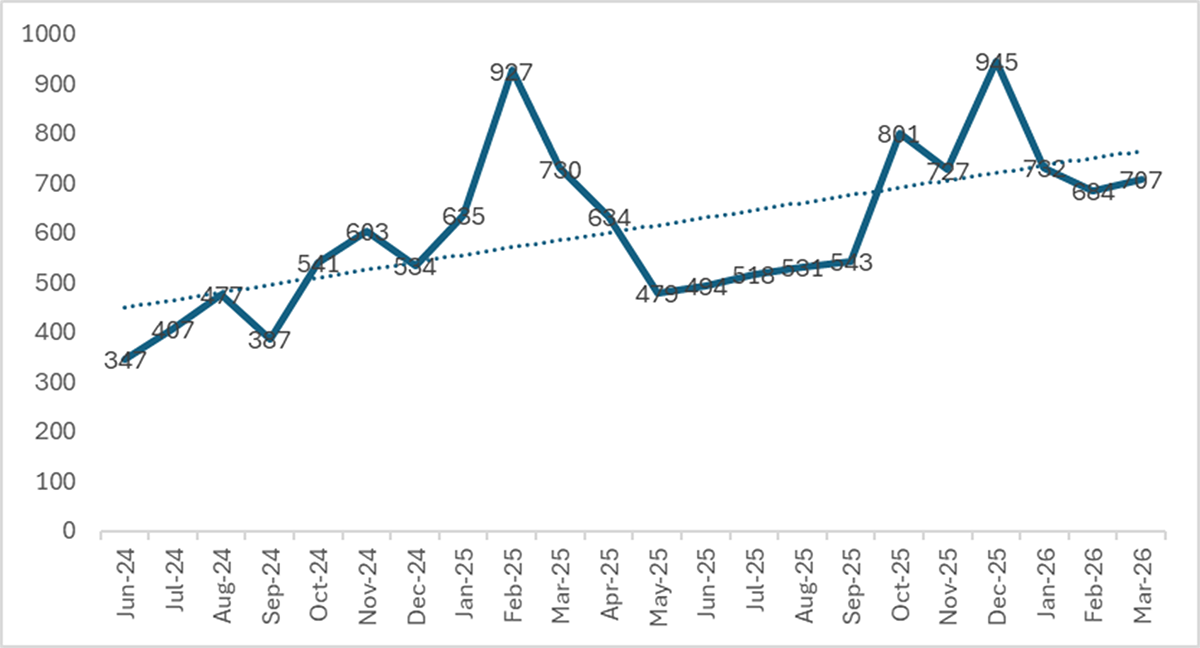
In Q1 2026, our monitoring tracked 2,122 new victims posted on data leak sites across more than 70 active leak portals. This figure represents a 12.2% decline from the all-time record of 2,416 victims in Q4 2025. However, it remains the second-highest Q1 on record, sitting 117% above Q1 2024 (977 victims). Monthly volumes were remarkably stable: January saw 732 victims, February 684, and March 706, averaging 707 per month. This consistency suggests that ransomware operations have found a sustainable operating tempo, even as the most extreme spikes subside.
Why does the year-over-year comparison show a decline, and is that misleading?
Headline numbers show a 7.1% drop from Q1 2025 (2,285 victims) to Q1 2026 (2,122). But this comparison is deceptive because Q1 2025 was heavily inflated by Cl0p's Cleo mass-exploitation campaign, which contributed roughly 390 victims in a single burst. If we remove Cl0p from both periods, the picture reverses: Q1 2025 had 1,894 victims, while Q1 2026 had 1,995 — a year-over-year increase of 5.3%. This means the underlying growth trend in ransomware activity continues, even if headline figures look lower. The ecosystem is not shrinking; it's evolving beyond spectacular mass-hacks into a more distributed, persistent threat.
What is the biggest structural change in Q1 2026?
The most significant development is the reversal of fragmentation. For two years, the number of active ransomware groups grew from 51 in Q1 2024 to a peak of 85 in Q3 2025, while the top 10 groups' share of victims fell from 68% to 57%. In Q1 2026, that trend decisively flipped: the top 10 groups now account for 71.1% of all victims — the highest concentration since early 2024. The number of active groups dropped to 71, with 14 groups disappearing and 21 new ones emerging. This consolidation signals a maturing ecosystem where dominant players are squeezing out smaller operators through efficiency, brand trust, and affiliate loyalty.
Which ransomware group dominated Q1 2026?
Qilin maintained its position as the most prominent ransomware operation for the third consecutive quarter, posting 338 victims. This sustained dominance reflects Qilin's operational stability, effective affiliate program, and consistent pressure on a wide range of sectors. Their victim count alone accounts for roughly 16% of all Q1 2026 victims. Qilin's continued success underscores how a well-organized group can achieve long-term market leadership in a consolidating environment.
Who was the breakout group of Q1 2026?
The Gentlemen emerged as the breakout story, vaulting to third place globally. Their victim count exploded from 40 in Q4 2025 to 166 in Q1 2026 — a 315% increase. This rapid rise suggests an aggressive recruitment drive, possibly leveraging new exploits or targeting neglected sectors. The Gentlemen's ability to scale so quickly in a consolidating market demonstrates that even in a top-heavy landscape, agile newcomers can still disrupt the status quo.
Has LockBit made a comeback?
Yes, LockBit 5.0 has confirmed its return. After a period of reduced activity following law enforcement disruptions, LockBit posted 163 victims in Q1 2026, climbing to fourth place globally. This resurgence shows that LockBit's brand and infrastructure remain resilient. Their comeback is a reminder that dismantling a ransomware group requires more than takedowns — the affiliates and code often resurface. LockBit's rise alongside Qilin and The Gentlemen indicates a new tier of dominant players.
What does consolidation mean for the future of ransomware?
Consolidation suggests the ransomware market is maturing. Fewer, larger groups mean more efficient operations, higher barriers to entry for new actors, and potentially more sophisticated attacks as dominant players invest in R&D. Victims may face fewer but more devastating incidents. For defenders, this shift simplifies threat intelligence — focus on the top 10 groups — but also demands robust defenses against their advanced methods. The underlying growth trend persists, so organizations should expect continued high volumes and increasing professionalization of ransomware.